
Adapted from a blog post by Cooper Forsman.
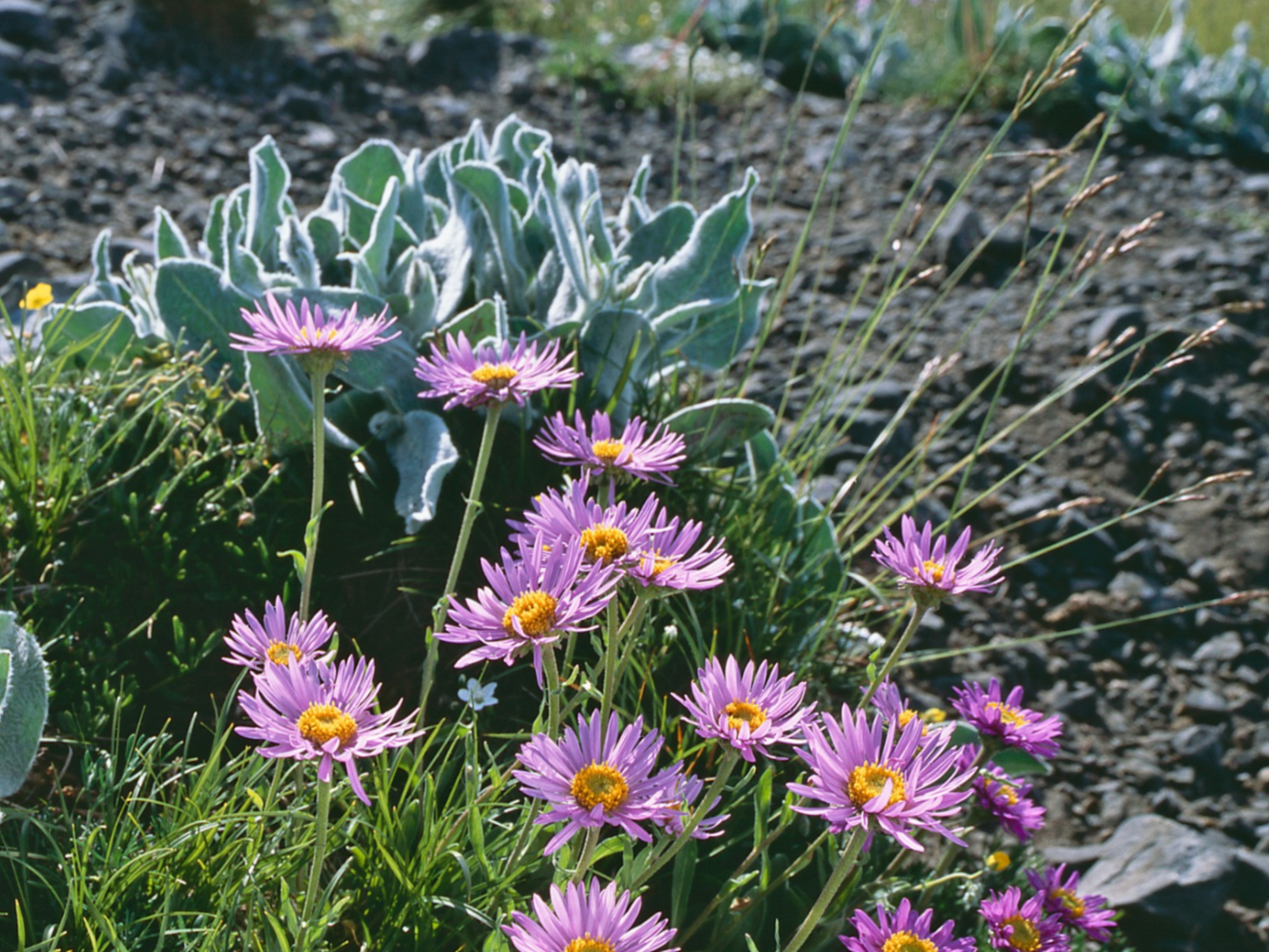
"Depaving" has become a buzzword in recent years: in Portland, a volunteer group started prying up parking lots by hand in the late 2000s and turning them into gardens. The idea has since spread to Chicago, where a third of the land surface is paved, according to Depave Chicago. This pavement is far from neutral: it sheds stormwater into our overwhelmed sewer system, worsens the urban heat island effect, and seals up ground that could offer shade or habitat. Permeable pavers and Green Alley initiatives are promising, and more Chicago homeowners are making the choice to shrink their patios and parking pads, replacing extra concrete with something green.
Under all this concrete is usually a compacted base of crushed stone and gravel, laid down to keep the concrete from heaving. It brings to mind the old slogan from the Paris student uprising of May 1968 (now relevant again, as France’s youth take to the streets): sous les pavés, la plage or "under the paving stones, the beach!” Students pried up the cobblestones and found a layer of paving sand, birthing the metaphor that another world was possible, waiting just beneath this one. When it comes to gravel gardens and depaving, this line might be more literal than you’d expect: what if, rather than bringing in loads of topsoil after demolition, we worked with what was there? Enter: the gravel garden.
Lean Ground
One of the best-known gravel gardens in the world is also a former car park. In 1991, English plantswoman Beth Chatto turned a parking lot at her nursery in Essex into an experiment. She planted drought-tolerant species into the lean, stony ground, watered it once at planting, and never watered again. Some thrived while others failed, but her guiding principle was simple: right plant, right place. Don't fix the ground to suit the plant; find the plant that suits the ground.
This approach has inspired a new generation of work happening right here in the Midwest. Jeff Epping and Teresa Woodard's new book, The Gravel Garden, features his own home garden in Wisconsin, alongside work from designers like Roy Diblik and Kelly D. Norris. It also features local designer Chris Abraham, who walked us through his gravel garden methods at our recent Tallgrass Talk: young perennials are planted straight into at least six inches of lean, fast-draining stone or sand, often bare-rooted with no compost or rich soil at all, and watered only until they can establish.

Chris Abraham surveying a gravel garden on a former vacant lot - photo by Raji Vela
This runs against conventional wisdom: don’t we want the best for our plants? But there’s a logic to it: rich soil feeds everything, and the fastest growers win. In our context, the fastest growers are usually aggressive weeds and invasive species. By contrast, lean soil and harsh conditions favor “stress-tolerators”: slow-growing, tough plants evolved to “wait out” the hard times. Many of our native prairie species fit that description, and the addition of a thick bed of gravel lets them root into the soil below while weed seeds struggle to germinate on top. Chris’s gravel gardens, many of them planted by Greencorps trainees on vacant lots with little budget for upkeep, rely on exactly this strategy.
Maintenance comes down to keeping the gravel lean. Leave dead stems and seedheads standing through winter (for structure and wildlife support), then cut everything back and rake it out in early spring before new growth starts. Left to rot in place, that dead material would slowly rebuild the rich organic layer that weeds love, leaving you back where you started. Pile the cut stems in a corner of the yard, so native bees and other insects overwintering inside can emerge: the habitat is simply moved, not destroyed.
A Gravel Reset
Gravel also works as a reset when too many "improvements" have been made. For our neighbors at Suncatcher Brewing, the original beer garden contractors brought in fresh topsoil that turned out to be loaded with weed seed, and the planting became a maintenance headache within its first year. Our own Abby Benedict and Cooper Forsman designed a fix: cap the worst area with locally sourced pea gravel, and replant it with tough native species found in northern Illinois gravel prairies like Bell Bowl Prairie.
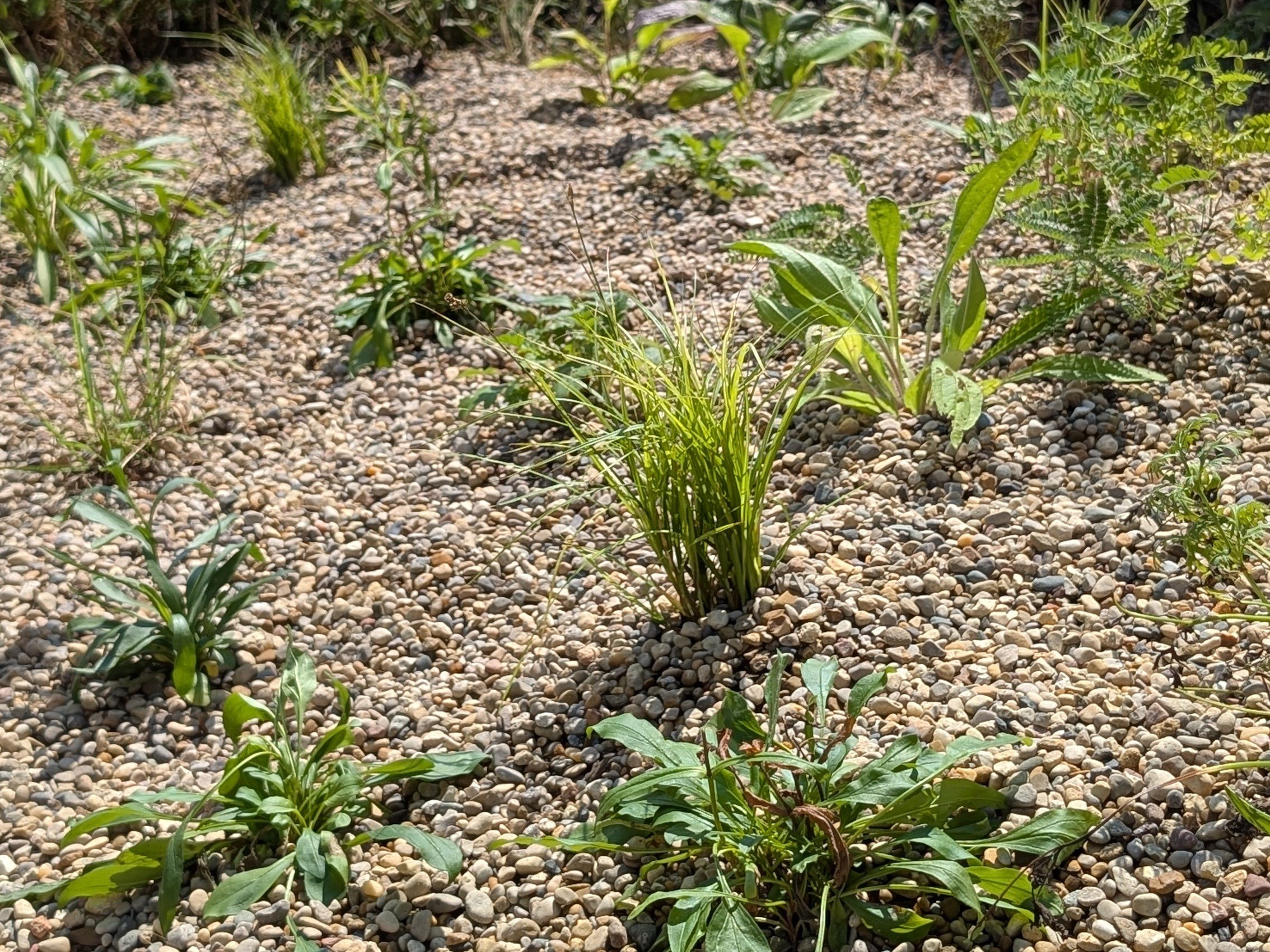
Suncatcher Gravel Garden the day after planting - photo by Cooper Forsman
“Since the brewery staff didn’t have time for weeding, we decided this would be a great spot to try out a gravel garden” says Abby. “We installed it in late summer, and it has already started to fill in well, with minimal maintenance. We're excited to see how growth continues as the plants become fully established.”
The imported soil was the problem, and the gravel was the cure. Had the garden been planned around the material already on site, it might never have needed help. There are caveats, especially for actual depaving projects (loosen the compacted soil before planting, and add appropriately-sized gravel to raise the grade and supplement the coarse leftovers); but if you start with a lean base, you’re halfway there.
Haul Less
Working with what's on site is also better for the planet. Heavy topsoil is scraped from somewhere else (often farmland on its way to becoming a warehouse or office park) and hauled long distances. Concrete has its own costs: cement is one of the largest industrial sources of carbon emissions, and a slab's "embodied carbon" is baked in on the day it is poured. Hauling it to a landfill means even more energy use.
Kept on site, broken concrete becomes "urbanite" for paths, edging, and low walls. Crushed, it makes an alkaline base for lime-loving prairie plants. The newly-opened ground is also valuable in itself: where concrete once shed water into our combined sewer and stormwater system, a rain garden can soak up stormwater the way the region's wetlands once did. And if your soil does need a fertility boost, build it up slowly with compost instead of replacing it. The cheapest answer and the lowest-carbon answer are often the same.
Working with What We Have
Landscape designers Thomas Rainer and Claudia West call this planting in a post-wild world: most of us aren't gardening on pristine ground, and Chicago is one of the most altered landscapes in the Midwest. Our altered urban landscapes may not be purely “natural”, but they can still be valuable and ecologically functional. In Chicago’s Marian Byrnes Park, many native plants (some rare) are growing on the slag left behind from a century of industrial steelmaking. Some ecologists see these "novel ecosystems" as modern cousins of rare alvars and barrens; others caution against letting them become an excuse to stop protecting remnants like Bell Bowl Prairie (much of which was lost to an airport expansion in 2023). Ideally, both can be true: protect what remains, and build creatively for a more functional future.
Small acts of depaving, reclaiming, and working with local materials may seem insignificant. But each one is a step toward a different relationship to what we’re given, and toward a more sustainable way of gardening.
Have poor soil and thinking about a lean native prairie or gravel garden? Come talk to us when we reopen in March; we can help you choose plants suited to tough conditions. And keep an eye on our Events page for upcoming Tallgrass Talks, where speakers share what's working in Chicago gardens and beyond.